What is Capital Management?
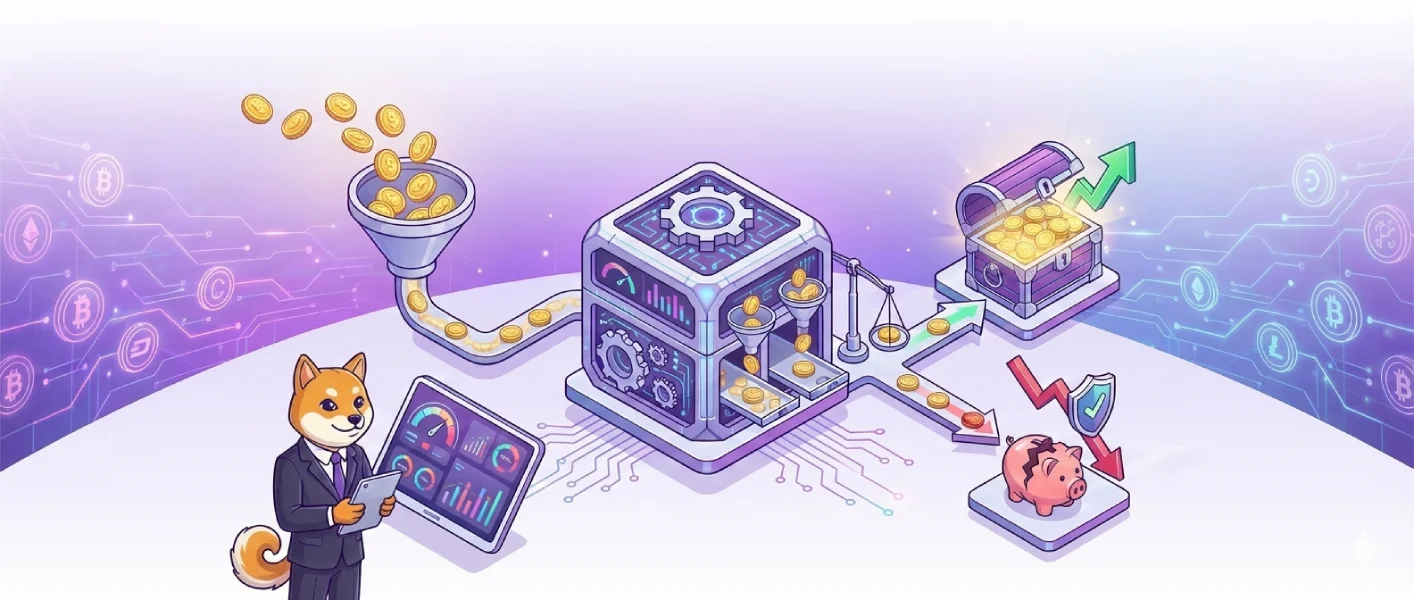
Capital Management refers to the set of principles, techniques, and decisions that help an individual or investor control and optimize the use of their capital to achieve adequate returns while minimizing the risk of losses. This process includes deciding how much capital to risk in each trade, how to allocate capital across assets, and which strategies to employ to protect the portfolio.
In volatile markets like cryptocurrencies or the stock market, capital management helps traders survive market fluctuations, reduce large losses, avoid emotional decisions, and gradually build sustainable profitability. Essentially, this skill allows a trader to preserve their capital even during temporary losses and continue participating in the market.
Key Components of Capital Management
1. Setting Financial Goals and Risk Tolerance
First, define the investment objective—short-term profit, capital preservation, long-term growth, etc.—and determine how much risk the individual is willing to accept. This forms the foundation for all subsequent capital management decisions.
2. Capital Allocation and Trade Size
A crucial principle is deciding how much capital to risk per trade so that losses do not severely impact the overall account. Many professional traders follow the “1–2% rule”, meaning they risk only 1–2% of their total capital per trade. This ensures that even after a series of losses, the account remains viable.
3. Portfolio Diversification
Spreading capital across multiple assets reduces risk: if one asset underperforms, others can offset its effect. This technique, called diversification, is essential for reducing volatility and protecting capital.
4. Setting Stop Loss and Take Profit
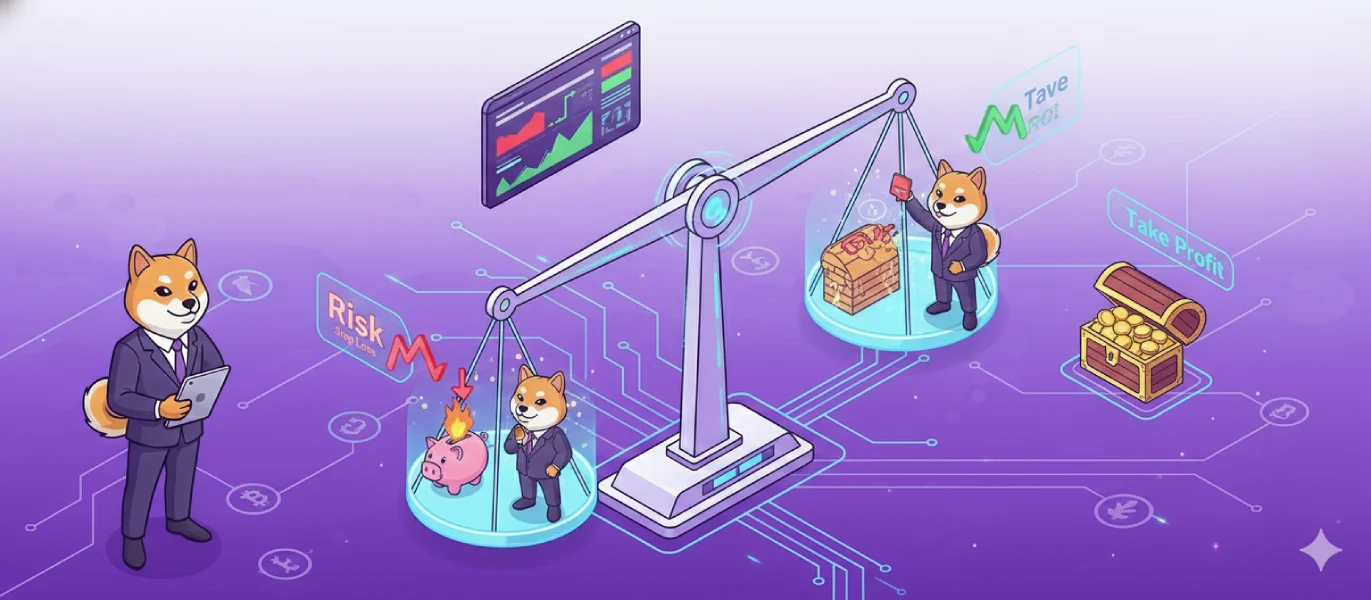
Using tools like Stop Loss (SL) and Take Profit (TP) allows traders to exit trades at the right moment, whether at a loss or a gain, without letting emotions influence decisions.
5. Continuous Monitoring and Adjustment
Capital management is not limited to entering trades; it requires constant review to ensure the portfolio remains optimized according to changing market conditions and to prevent strategic mistakes.
Importance of Capital Management
Capital Preservation: Without proper management, there is a risk of losing the entire account after a few unsuccessful trades.
Risk Reduction: Capital management techniques minimize potential losses and keep the investor in the game for better opportunities.
Emotional Control: Having a clear plan reduces impulsive decisions and brings discipline to trading.
Sustainable Profitability: Proper capital management improves long-term returns and helps navigate volatile markets.
Conclusion
In short, capital management means using capital intelligently and systematically to achieve the highest possible returns with the lowest possible risk. This concept applies to all types of trading and investment—crypto, stocks, forex, and beyond. Following key principles such as risk allocation, stop-loss setting, diversification, and continuous monitoring allows investors to trade calmly, profitably, and safely while avoiding significant losses.
What is Position Size?
Position Size refers to the amount of capital you allocate to a single trade. Instead of entering a trade with an arbitrary amount, you determine a precise and calculated size so that your exposure stays within your risk tolerance.
For example, if your total capital is $10,000 and you decide not to risk more than 2% per trade, the maximum risk per trade would be $200.
Why Determining Position Size Matters
Risk Control: Knowing your position size ensures you know exactly how much you are risking in each trade.
Preventing Large Losses: Over-sized positions without planning can turn a small loss into a major account drawdown.
Consistency in Trading: Position sizing helps your trading plan remain independent of market emotions, creating more disciplined trades.
How to Calculate Position Size
To determine position size, traders usually use simple formulas based on total capital, acceptable risk, and distance from entry to stop loss:
1. Decide the Risk Percentage per Trade
Determine how much of your total capital you are willing to risk in a single trade. Professional traders typically risk 1–2% per trade, ensuring that even consecutive losses don’t significantly harm the overall account.
2. Calculate Dollar Risk per Trade
If your total capital is $10,000 and you set risk at 2%:
10,000×2%=200 dollars risk per trade10,000 × 2\% = 200 \text{ dollars risk per trade}10,000×2%=200 dollars risk per trade
3. Determine Price Difference Between Entry and Stop Loss
If your entry price is $100 and stop loss is $95:
100−95=5 dollars risk per unit100 − 95 = 5 \text{ dollars risk per unit}100−95=5 dollars risk per unit
4. Calculate Position Size
Position Size=Dollar RiskPrice Distance to Stop Loss\text{Position Size} = \frac{\text{Dollar Risk}}{\text{Price Distance to Stop Loss}}Position Size=Price Distance to Stop LossDollar Risk
In this example:
200÷5=40 units200 ÷ 5 = 40 \text{ units}200÷5=40 units
You can enter 40 units of the asset in this trade.
Other Methods to Determine Position Size
Fixed Dollar Method: Invest a constant dollar amount per trade regardless of price or market volatility.
Volatility-Based Method: Adjust position size based on market volatility for assets with larger price swings.
Position Size Calculators: Online tools that calculate position size automatically based on your capital, risk percentage, entry price, and stop loss.
Key Tips for Position Sizing
Never risk more than your acceptable risk level.
Align position size with your stop loss to ensure timely exits.
Using calculators minimizes human errors in calculations.
Position sizing is part of a comprehensive risk management plan, along with stop loss, take profit, and exit strategies.
Conclusion
Position size is determining how much of your capital to allocate to a trade so that you can maximize potential gains while controlling risk. It is calculated based on risk percentage, distance to stop loss, and total capital, and is a critical component of capital management and risk control in trading.
What is Risk/Reward ( R/R)?
Risk/Reward Ratio (R/R) is a metric that shows a trader how much risk (potential loss) they are taking compared to the potential reward (profit) in a trade. In simple terms, it helps determine whether a trade is worth entering by comparing the expected gain to the possible loss.
The R/R ratio is usually expressed as a number or ratio, like 1:2 or 1:3. For example, an R/R of 1:2 means that for every $1 risked, you expect to gain $2 in profit.
Why Risk/Reward Ratio is Important
The R/R ratio is a key tool in risk management and trade analysis because it helps a trader:
Estimate the potential profit and loss before entering a trade.
Adjust position size, stop loss, and take profit more effectively.
Decide if a trade is worthwhile in terms of risk vs. reward.
Even traders with a low win rate can remain profitable in the long run if they maintain favorable R/R ratios, because the profits from winning trades can cover multiple losing trades.
How to Calculate Risk/Reward
The formula is straightforward:
R/R Ratio=Potential ProfitPotential Risk\text{R/R Ratio} = \frac{\text{Potential Profit}}{\text{Potential Risk}}R/R Ratio=Potential RiskPotential Profit
Where:
Example:
R/R=105=2\text{R/R} = \frac{10}{5} = 2R/R=510=2
Or as a ratio: 1:2 → For every $1 risked, $2 reward is expected
Common R/R Ratios
Professional traders often aim for:
Practical Tips for Using R/R
Always calculate the R/R ratio before entering a trade to assess trade quality.
Use it together with logical stop loss and take profit levels for better capital management.
Ensure the R/R ratio aligns with your trading style and risk tolerance — higher ratios are not always better if the trade setup is weak.
Conclusion
Risk/Reward (R/R) is a simple yet powerful tool to compare potential profit vs. potential loss in trades. Calculating the ratio before entering a position helps traders make informed decisions, set proper stop loss and take profit levels, and improve risk and capital management.
Why Emotions
Matter in Trading
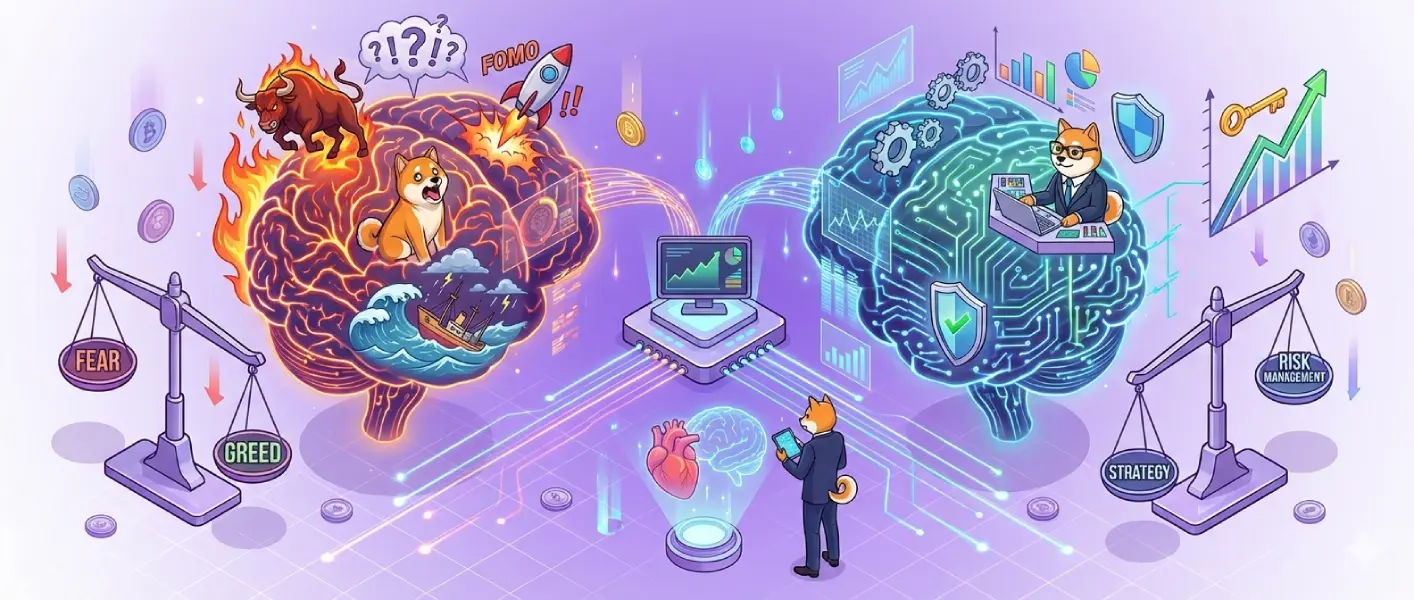
Trading psychology refers to the emotional and behavioral patterns that influence a trader’s decisions, such as fear of loss, greed for higher profit, or the desire for revenge after a loss. These emotions can lead a trader to deviate from their trading plan and act against logic, even if the analysis is sound.
Emotions can also cause repetitive irrational behaviors, for example:
Fear may make you exit a trade before reaching your take profit or trigger your stop loss too early.
Greed can lead you to hold trades too long or move your take profit, missing potential gains.
Revenge may drive you to increase trade size or risk after a loss, often resulting in larger losses.
Types of Harmful Emotions in Trading
Fear
Fear of loss, price drops, or missing opportunities can prevent proper execution of a trading plan. It may cause premature exits or impulsive entries at inappropriate levels, even from profitable trades.
Greed
Greed is the desire for more profit than realistically achievable. It can lead to:
Holding winning positions too long
Over-leveraging or increasing trade size unnecessarily
Ignoring stop losses or risk management rules
These behaviors often result in significant losses.
Revenge
After a loss, some traders seek to “recover quickly.” Revenge trading can cause:
Practical Strategies to Control Emotions
Have a Written Trading Plan
Documenting your trades, including:
Adhere to Risk Management
Clearly defining risk per trade, using stop losses, and setting proper position size minimizes emotional impact. Pre-determined risk reduces anxiety and fear of losses.
Practice and Experience
Use Psychological and Focus Techniques
Conclusion
Financial markets trigger strong emotional responses, and controlling emotions like fear, greed, and revenge is crucial for trading success. Trading psychology is a skill that must be developed to achieve:
Better decision-making
Proper risk management
Consistent performance
Even with strong technical analysis and advanced tools, uncontrolled emotions can undermine consistent success, because they directly affect every trading decision.
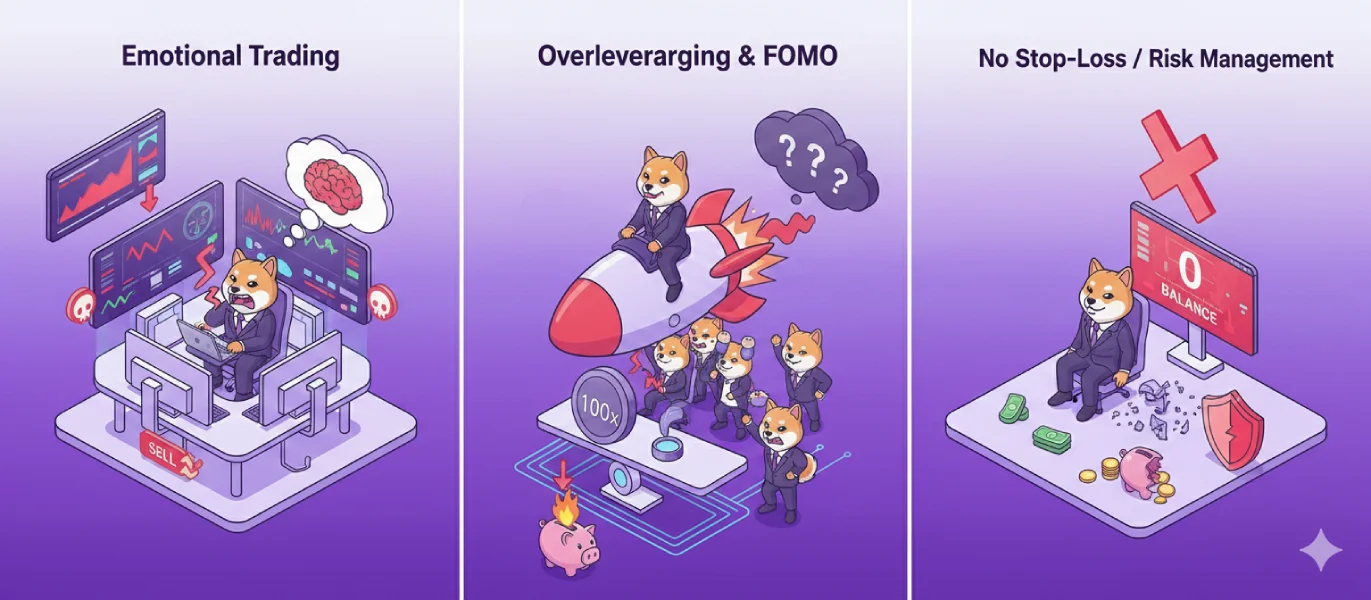
Fatal Trading Mistakes
Here are the most common deadly mistakes traders make and how to avoid them:
1. No Trading Strategy or Plan
Starting trades without a clear plan that defines entry, exit, stop loss, and take profit is one of the most common mistakes. Without a plan, traders rely on emotions, which leads to repeated errors, such as buying at the peak or selling at the bottom.
2. Inadequate Research or Failing to Do Your Own Research (DYOR)
Many beginners invest without thoroughly examining the project, team, roadmap, and fundamentals of a cryptocurrency. This can result in investing in low-quality projects or scams.
3. Emotional Trading
Making decisions based on fear, greed, FOMO, or revenge after a loss causes traders to deviate from their plan and make bigger mistakes. Examples include:
4. Ignoring Risk Management and R/R Ratio
Neglecting risk/reward ratio, not setting stop losses, or mismanaging position size can lead to heavy losses. Traders who do not manage risk may lose a large portion of their capital in just a few trades.
5. Over-Leveraging
Especially in futures markets, using too much leverage can cause even a small price movement to liquidate or wipe out your account. Protecting your capital should always be the priority.
6. Overtrading
New traders often open multiple trades per day due to frequent price fluctuations. This behavior rarely leads to consistent profit and increases costs while amplifying emotional decision-making.
7. Revenge Trading
After a loss, some traders try to “recover quickly” and enter high-risk trades without proper analysis, often resulting in even bigger losses.
8. Ignoring Trend Analysis and Long-Term Perspective
Focusing only on short-term movements without considering overall market trend, support/resistance levels, or longer timeframes can lead to analytical errors. Short-term focus alone may distort the real picture of the market.
9. Ignoring Costs and Commissions
Trading fees and commissions can accumulate over multiple trades and reduce net profit. This is especially significant for day traders and scalpers and is often overlooked by beginners.
10. Blindly Following Rumors and Social Media
The crypto market is heavily influenced by news and social media opinions. Making decisions based solely on social media without proper analysis can lead to buying at the peak and selling at the bottom.
Conclusion
Trading mistakes range from inadequate research and emotional decisions to poor risk management and excessive leverage. A professional trader should:
Have a precise trading plan
Follow risk management rules
Take market analysis seriously
Avoid emotional and unplanned trading
Recognizing and avoiding these mistakes significantly increases your chances of survival and profitability in the market.
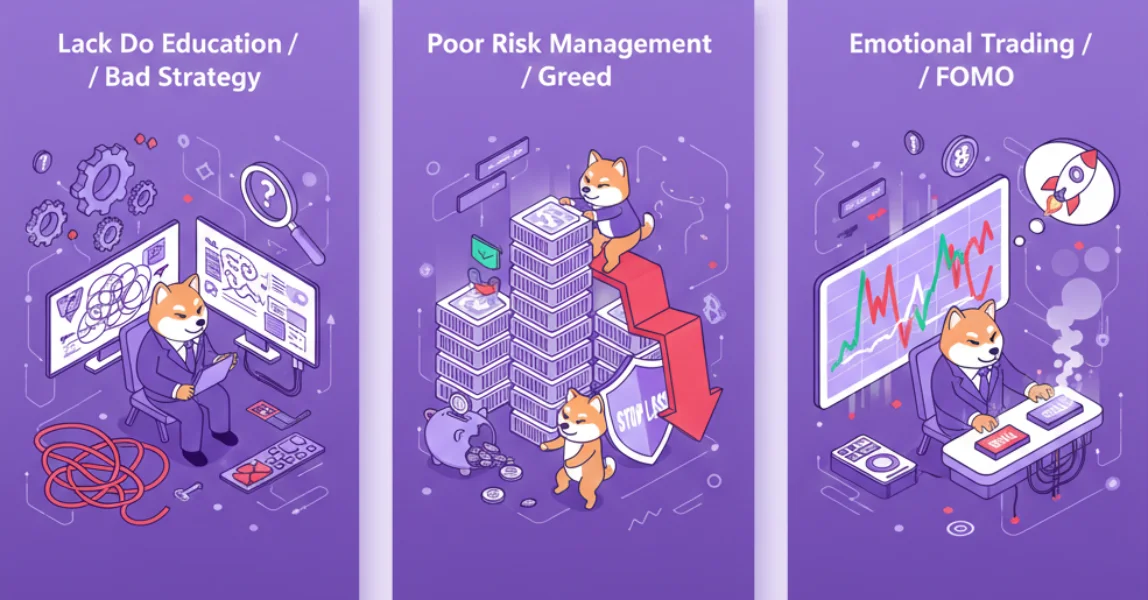
Why Most Traders Lose Money
Here’s why the majority of traders fail in the markets:
1. Lack of Strategy and Trading Plan
Many traders enter the market without a clear plan, relying on emotions and guesses. Without a defined framework for entry, exit, stop-loss, and take-profit, decisions are often incorrect and impulsive.
2. Poor Risk Management
Ignoring risk management—like setting stop-losses, proper position sizing, and risk/reward ratios—can cause even a single losing trade to wipe out a significant portion of capital. Many major losses stem directly from this oversight.
3. Emotional Decision-Making
Emotions such as fear, greed, revenge trading, or overexcitement can lead to irrational choices, such as:
Exiting a profitable trade too early
Holding onto a losing trade for too long
Ignoring technical analysis or risk management rules
4. Market Volatility and Noise
In highly volatile markets like crypto, technical analysis can generate false signals due to price noise. Traders who focus only on small price movements often fail because the market can mistake short-term corrections for trend reversals.
5. Lack of Discipline in Trade Execution
Many traders react to every signal or open multiple trades (overtrading) instead of following a structured system. This behavior often results from fear of missing out or anxiety over potential losses and leads to repeated losses.
6. Overconfidence and Cognitive Biases
Early success can make traders overestimate their abilities, leading them to ignore risk management rules or deviate from their strategy. Overconfidence is a major cause of significant losses.
7. Neglecting Journaling and Trade Review
Successful traders maintain a trading journal—recording trades, analyzing mistakes, and learning from them. Many losing traders skip this step, causing them to repeat the same errors over and over.
8. Expecting Quick Profits and Lack of Patience
Expecting fast, large gains often results in poor long-term planning, ignoring risk/reward ratios, or taking excessive risks to recover small losses. This mindset is typically driven by greed and impatience.
Conclusion
The main reasons most traders lose money are:
Markets don’t “want” traders to lose, but their structure makes it very easy to fail without knowledge, discipline, and emotional control.