Futures Trading Tutorial
What Are Futures?
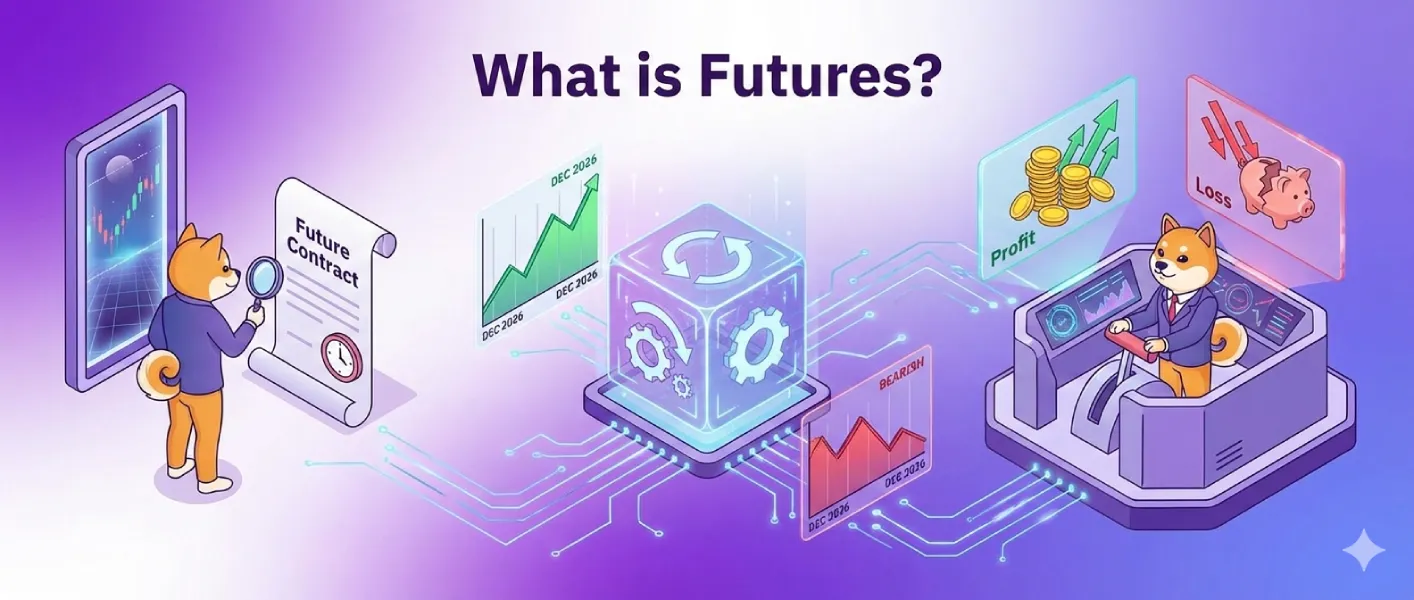
Futures trading is a type of derivative contract that allows traders to speculate on the future price of an asset without actually owning it. In a futures contract, two parties agree to buy or sell a specific asset (like Bitcoin or Ethereum) at a predetermined price on a set date in the future.
Unlike the spot market, where assets are exchanged immediately, in futures trading you are trading the price movement, not the asset itself.
How Futures Trading Works
In a futures contract, the buyer and seller agree on a price and settlement date:
Example: If someone buys a Bitcoin futures contract at $60,000 with a three-month expiry and the price rises to $75,000 at expiration, they can buy at the agreed price and sell immediately for a $15,000 profit.
Conversely, if the price drops, they must still buy at the $60,000 price, realizing a loss.
Traders can:
This allows profit opportunities even in bearish markets.
Types of Futures Contracts
Based on Underlying Asset
Each contract tracks the price of the underlying asset.
Based on Contract Size
Based on Expiry
Expiring Contracts: Have a set expiration date and are settled at maturity (e.g., quarterly contracts on CME).
Physical Delivery Contracts: The underlying cryptocurrency is delivered upon expiry.
Perpetual Contracts: No expiry date; funding rates align contract price with spot market price. Very popular in crypto exchanges.
Futures vs Spot vs Margin Trading
Asset Ownership:
Futures: No actual ownership; contract obligates buying/selling in the future
Spot: Immediate ownership of the asset
Margin: Real asset purchased using borrowed funds
Settlement:
Futures: Pre-determined date (except perpetual contracts)
Spot: Immediate settlement
Margin: Open until the position is closed
Trade Direction:
Futures: Can go long (buy) or short (sell)
Spot: Profit only from price increase; must sell to exit
Margin: Can go long or short
Leverage:
Futures: High leverage; magnifies gains and losses
Spot: No leverage; trade only with your own capital
Margin: Moderate leverage; used to buy actual assets
Liquidation Risk:
Futures: High risk due to leverage
Spot: No liquidation; value may drop but won’t reach zero
Margin: Risk exists but lower than futures
Advantages of Futures Trading
Profit from market fluctuations: Long and short positions allow gains in rising or falling markets.
High liquidity and fast execution: Large trading volumes ensure quick order fills.
Leverage: Small capital can control larger positions for higher potential profits.
Hedging: Miners and large investors can protect their holdings against price swings.
No need to hold actual cryptocurrency: Reduces risk of theft or loss.
Risks and Disadvantages
High volatility and liquidation risk: Leverage can magnify losses quickly.
Complexity: Requires understanding margin, funding rates, and liquidation mechanics.
Regulatory risk: Changes in rules can affect liquidity or access.
Hidden costs: Funding fees, exchange fees, and interest on borrowed funds.
Key Risk Management Tips for Futures
Education and Research: Learn fundamentals like leverage, margin, and funding rates.
Use Appropriate Leverage: Start small; high leverage can wipe out capital quickly.
Set Stop-Loss and Take-Profit: Predefine exit points to limit losses and lock in profits.
Diversify Positions: Avoid putting all capital into a single trade; allocate percentages of total portfolio.
Control Emotions: Avoid trading based on fear or greed; follow a clear strategy.
Conclusion
Cryptocurrency futures allow traders to speculate on price movements without owning the asset. They are useful for both speculation and hedging, but come with high risk due to leverage and volatility.
Entering the futures market is only wise if you:
Understand the concepts fully
Apply risk management strategies
Trade on reputable exchanges
Without education and a clear plan, futures trading can quickly destroy capital.
Long and Short Positions
In financial markets, especially in cryptocurrency trading, traders use different strategies to profit from price fluctuations. Two key terms frequently used are Long Position (Long) and Short Position (Short). Understanding these approaches helps traders identify opportunities in both rising and falling markets and make informed decisions.
What is a Long Position?
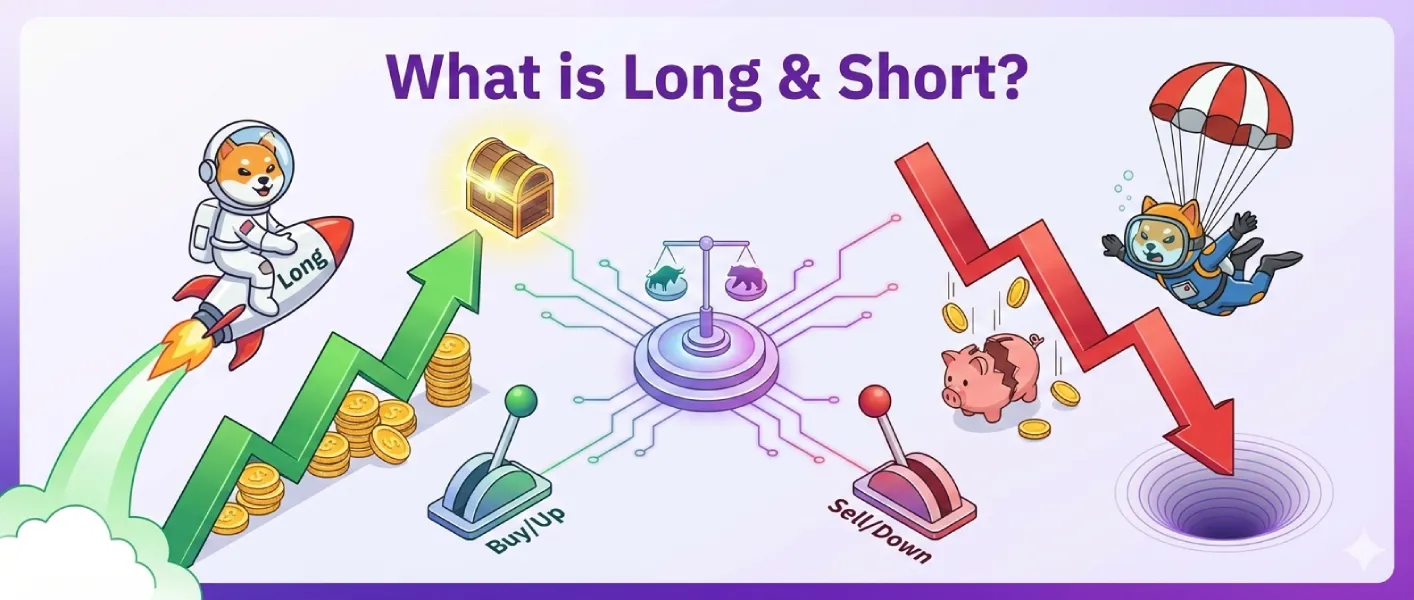
A long position means buying a cryptocurrency with the expectation that its price will increase in the future. The trader owning a long position holds the asset and expects to sell it later at a higher price to make a profit.
Risk is limited: Maximum loss is limited to the invested capital; if the price drops, you only lose the amount you paid.
Applicable in spot and derivative markets: In spot trading, you own the asset and can hold it indefinitely.
Advantages of Long Positions:
Profit in bullish markets: Buy low, sell high.
Simplicity and beginner-friendly: Easy to execute in spot trading without complex mechanisms.
Limited risk: Loss is capped at your initial investment.
Long-term holding potential: Can hold assets for long-term growth.
Disadvantages of Long Positions:
Price decline risk: Asset value may drop due to negative news or market downturns.
Requires patience and analysis: Must monitor charts, indicators, and news to enter at optimal points.
What is a Short Position?
A short position involves betting on the decrease in the price of an asset. The trader borrows the asset from an exchange or another party and sells it at the current price. Later, when the price drops, they buy it back at a lower price and return the borrowed asset.
Profit comes from the difference between the selling price and the repurchase price.
Typically done in derivative markets or margin accounts, because borrowing the asset is necessary.
Advantages of Short Positions:
Profit in bearish markets: Allows traders to earn even when prices fall.
Portfolio hedging: Protects other investments in case of price drops.
Leverage usage: Can amplify gains using margin or futures.
Disadvantages of Short Positions:
Unlimited risk: Losses can theoretically be infinite if the price rises.
Requires knowledge and experience: Complex due to borrowing and leverage.
Interest and fees: Borrowing assets incurs costs that reduce net profit.
Time constraints: Some platforms limit how long a short position can stay open.
Differences Between Long and Short Positions
Market view:
Asset ownership:
Profit mechanism:
Maximum loss:
Complexity level:
Long: Relatively simple, beginner-friendly
Short: More complex, requires margin account and careful risk management
Steps to Open a Long Position
Research and analysis: Study the project and market; use technical and fundamental analysis.
Select a suitable exchange: Choose a reputable platform with sufficient liquidity and reasonable fees.
Deposit funds: Fund your account with fiat or cryptocurrency.
Place a buy order: Market or limit order based on your strategy.
Monitor and manage the position: Set profit targets and stop-loss levels.
Exit the position: Sell when the price reaches your target to secure profit.
Steps to Open a Short Position
Research and analysis: Identify bearish signals like negative news, price bubbles, or technical indicators.
Choose a suitable platform: Use an exchange that supports margin or derivative trading.
Create a margin account: Deposit collateral to borrow assets.
Borrow the asset: Sell the borrowed asset at the current market price.
Monitor and set stop-loss: Actively manage the position.
Close the position: Buy back the asset at a lower price and return the borrowed amount.
Risks and Rewards
Long Position Risks:
Long Position Rewards:
Short Position Risks:
Short Position Rewards:
Leverage in Cryptocurrency
and Proper Usage in Trading
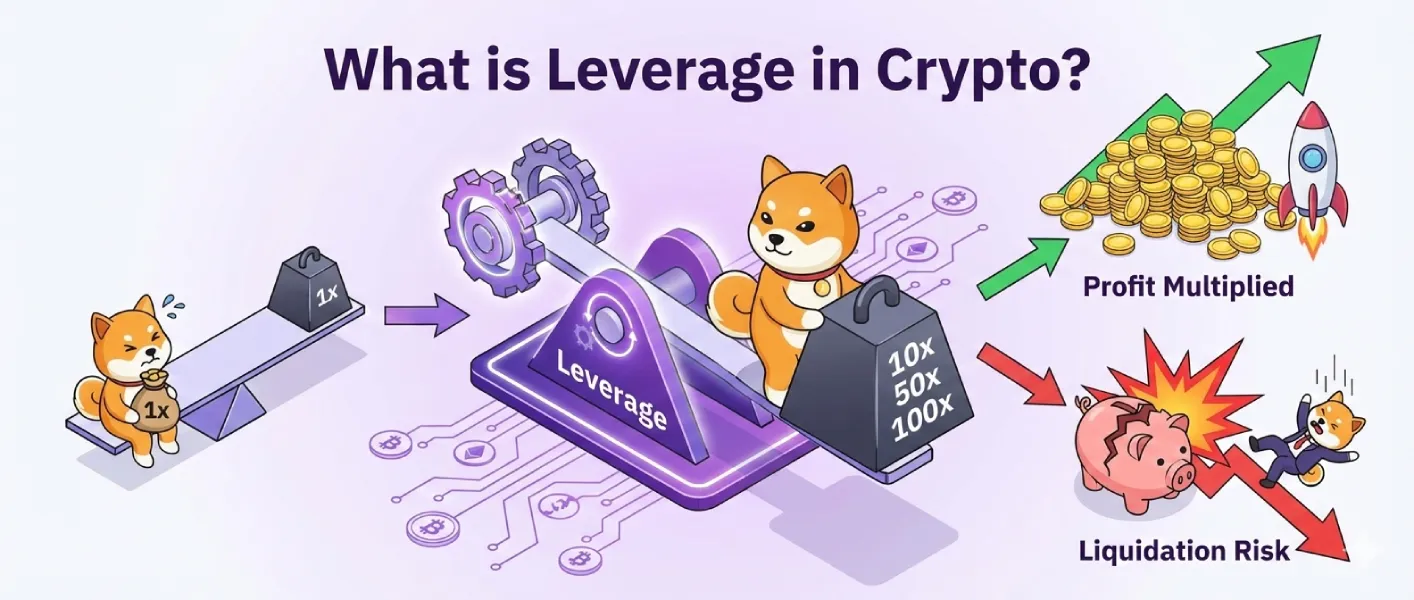
Leverage is a financial trading tool that allows you to open positions larger than your initial capital by using borrowed funds from an exchange or broker. While it can multiply potential profits, it also increases losses and the risk of liquidation.
In volatile markets like cryptocurrencies, correct or incorrect use of leverage can make a significant difference in trading outcomes. This article explains in simple terms how leverage works, its advantages and disadvantages, how it differs from margin, and key risk management principles for proper use.
What Is Leverage and How Does It Work?
Definition of Leverage
Leverage is a multiplier that allows you to increase your initial capital and open larger positions. In leveraged trading, you deposit collateral in your account, and the exchange lends you additional funds based on your chosen leverage ratio (e.g., 5× or 10×).
In crypto markets, leverage typically ranges from 2× up to 100× or even 200× your initial capital.
How to Read Leverage Ratios
Ratios are shown as “n:1” or “n×”.
5× (1:5) leverage means your capital is multiplied by five, and only 20% of the total position is required as collateral.
20× (1:20) leverage means only 5% of the total position is required as collateral.
Higher leverage requires less collateral but increases liquidation risk.
Simple Example
If you have $100 and want to open a $1,000 Bitcoin position, using 10× leverage allows you to borrow $900 from the exchange and create a $1,000 position.
Advantages of Using Leverage
Increased buying power and potential profit: Small price movements can generate multiplied gains if your analysis is correct.
Ability to trade in all trends: You can profit in both bullish (long) and bearish (short) markets.
Capital efficiency and DeFi usage: Less capital is required per trade, freeing funds for staking, liquidity provision, or NFTs.
Access to advanced strategies: Enables professional strategies like arbitrage and hedging.
Disadvantages and Risks of Leverage
Risk of liquidation: If the market moves against your position and you lack a stop-loss, you may lose your entire collateral.
With 10× leverage, a 10% adverse move can liquidate your position.
With 100× leverage, just a 1% adverse move can trigger liquidation.
Amplified losses: Just as profits multiply, losses multiply at the same rate.
High stress levels: Crypto volatility combined with leverage increases psychological pressure.
Complexity and multiple fees: Requires understanding initial margin, maintenance margin, interest rates, funding rates, and exchange fees.
Difference Between Leverage and Margin
Margin is the initial capital or collateral required to open a position. It is usually a percentage of the total trade value.
Leverage is the multiplier that determines how much additional capital the exchange lends you.
For example, with $100 margin and 10× leverage, your total position size becomes $1,000.
Proper Use of Leverage
1. Choose Appropriate Leverage
Start with low leverage. High levels like 50× or 100× are extremely risky for beginners.
It is recommended to begin with 2× to 5× leverage and increase only with experience.
Use only a portion of your total capital for leveraged trading. Allocate no more than 20% of your total portfolio to leverage, keeping the rest in spot or lower-risk investments.
2. Use Risk Management Tools
Stop Loss: Automatically closes a position at a predefined loss level to prevent liquidation.
Take Profit: Locks in gains before the market reverses.
Risk-to-Reward Ratio: Enter trades only when the potential reward is at least 1.5 to 2 times the potential risk.
3. Conduct Proper Market Analysis and Have a Trading Plan
Technical and fundamental analysis: Use tools like trend lines, moving averages, and RSI before entering leveraged trades.
Stick to a strategy: Define entry, exit, position size, and capital management rules and follow them strictly.
4. Avoid Emotional Trading
Avoid greed and FOMO: Make decisions based on analysis, not emotions.
Stay informed about news and events: Economic updates and regulations can quickly impact market direction.
5. Choose the Right Platform and Understand Contract Terms
Reputable exchanges: Different platforms offer different leverage limits. For example, some exchanges like Binance offer up to 125× leverage depending on the contract. Understanding fees and rules helps prevent unexpected liquidation.
Isolated vs Cross Margin:
In isolated margin, only the allocated margin is at risk.
In cross margin, your entire account balance may be used to prevent liquidation.
Choosing the right margin mode depends on your strategy and risk tolerance.
Who Is Leveraged Trading Suitable For?
Leveraged trading requires knowledge, experience, risk tolerance, and emotional control. It is suitable for individuals who:
Fully understand leverage, margin, and capital management principles.
Have strong market analysis skills.
Can tolerate potential losses.
Control emotions and follow a defined plan.
Beginners or those unable to handle stress should avoid leveraged trading or start with very low leverage and small capital.
Setting Stop Loss (SL) and Take Profit (TP) in Cryptocurrency Trading
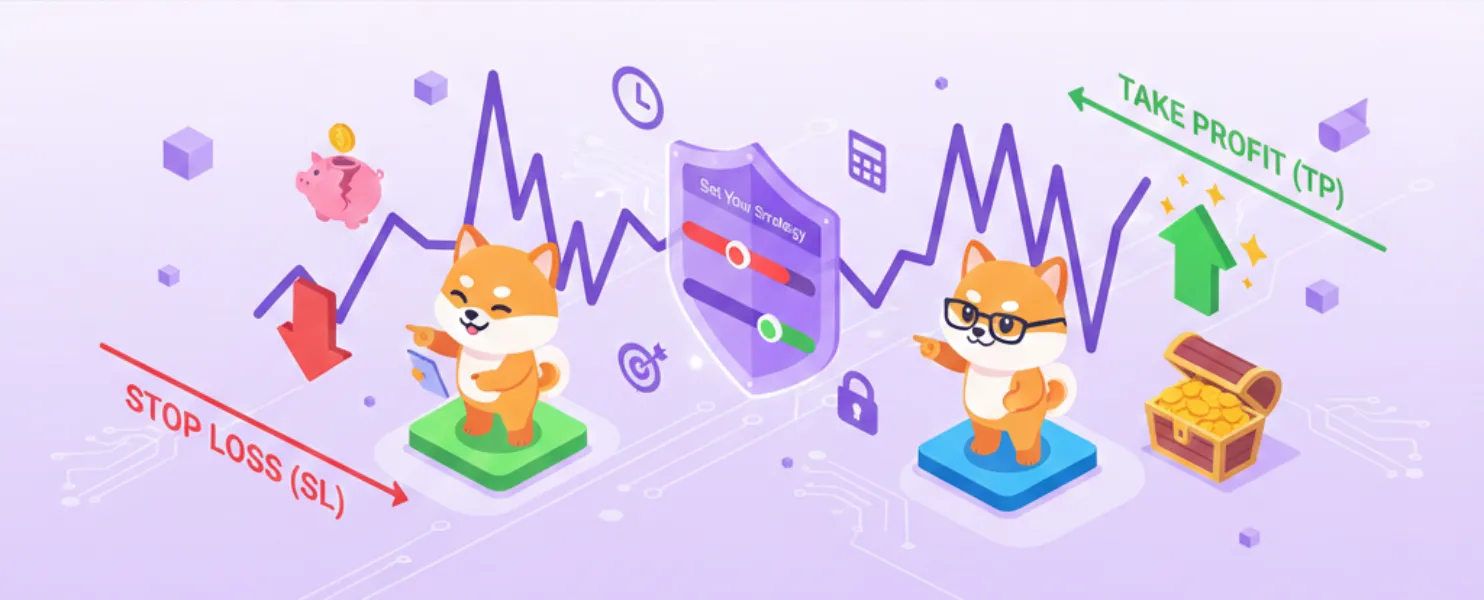
Due to high volatility and rapid price movements, the cryptocurrency market requires precise risk management. Stop Loss (SL) and Take Profit (TP) are tools that help traders control risk and secure profits. Every trade ultimately results in either profit or loss; by setting SL and TP, the trader automatically exits the position at predetermined levels.
Definition of Stop Loss and Take Profit
Take Profit (TP)
Take Profit is an order that allows a trader to set a specific price to close a trade and secure profit. When the price reaches this level, the position closes automatically and the profit is realized.
Setting TP prevents losing profits if the market reverses.
Stop Loss (SL)
Stop Loss is an order that defines the maximum acceptable loss for a trader. If the price reaches the specified level, the trade closes automatically to prevent further losses.
In the volatile crypto market, having an SL is essential; without it, the entire capital could be lost.
Importance of Using SL and TP
Reduced stress and emotional pressure: No need to monitor charts 24/7.
Capital management: Helps protect capital and avoid large losses.
Trading discipline: Encourages adherence to a trading plan and prevents emotional decisions.
Methods for Setting Stop Loss (SL)
1. Percentage-Based Risk Method
Define your risk tolerance first. Many professional traders recommend risking only 1–2% of total capital per trade.
For example, with $10,000 capital and 2% risk tolerance, SL should limit potential loss to $200.
2. Support and Resistance Levels
Place SL slightly below support or above resistance levels. If price breaks these levels, exiting can prevent further losses.
3. Moving Average Method
Use moving averages as dynamic SL levels. If price breaks below a key moving average, it may signal trend change.
4. Time-Based Stop (Stop Time)
Exit the position after a specific time period regardless of outcome. This reduces exposure to unexpected events.
5. Trailing Stop
A trailing stop automatically adjusts the SL as the price moves favorably, protecting accumulated profits.
For example, if Ethereum rises 15%, the SL can move upward accordingly to secure gains.
6. Consider Key Factors
When setting SL, consider financial risk tolerance, trading strategy (short-term or long-term), profit expectations, and overall market conditions.
Methods for Setting Take Profit (TP)
1. Percentage Target Method
Set a profit target before entering the trade.
For example, buying Bitcoin at $50,000 with a 10% target means setting TP at $55,000.
2. Support, Resistance, and Indicators
Use resistance levels, RSI, ATR, Fibonacci, or other indicators to determine optimal TP zones.
Placing TP slightly below a strong resistance increases the chance of execution before reversal.
3. Risk-to-Reward Ratio
Define the ratio before entering a trade. A 1:2 or 1:3 ratio means aiming for two or three units of profit per unit of risk.
4. Chart Patterns and Candlestick Formations
Use patterns such as head and shoulders, triangles, reversal candles, or Fibonacci levels to determine TP targets.
SL and TP Order Types on Exchanges
Market Stop-Loss: Executes at market price once the stop level is reached. Fast execution but possible slippage.
Limit Stop-Loss: Activates a limit order after reaching the stop price; may not execute if price moves too quickly.
Trailing Stop: Adjusts automatically as the price moves favorably.
To activate SL or TP, traders usually enter Stop Price, Limit Price (if applicable), and order quantity. Once the stop level is reached, the order is automatically placed.
Important Tips and Recommendations
Align SL and TP with your trading plan: Base levels on strategy and historical data.
Avoid obvious stop levels: Do not place SL too close to key levels to avoid stop hunting.
Use a demo account: Test strategies before applying them to real capital.
Regularly update SL and TP: Adjust levels during strong trends to protect gains.
Combine with indicators: RSI, ATR, Parabolic SAR, and Fibonacci can improve accuracy.
Avoid placing levels too close or too far: SL too close leads to frequent small losses; SL or TP too far weakens risk management. Levels should be logical and aligned with market volatility.
Liquidation and Prevention Methods
in Cryptocurrency Trading
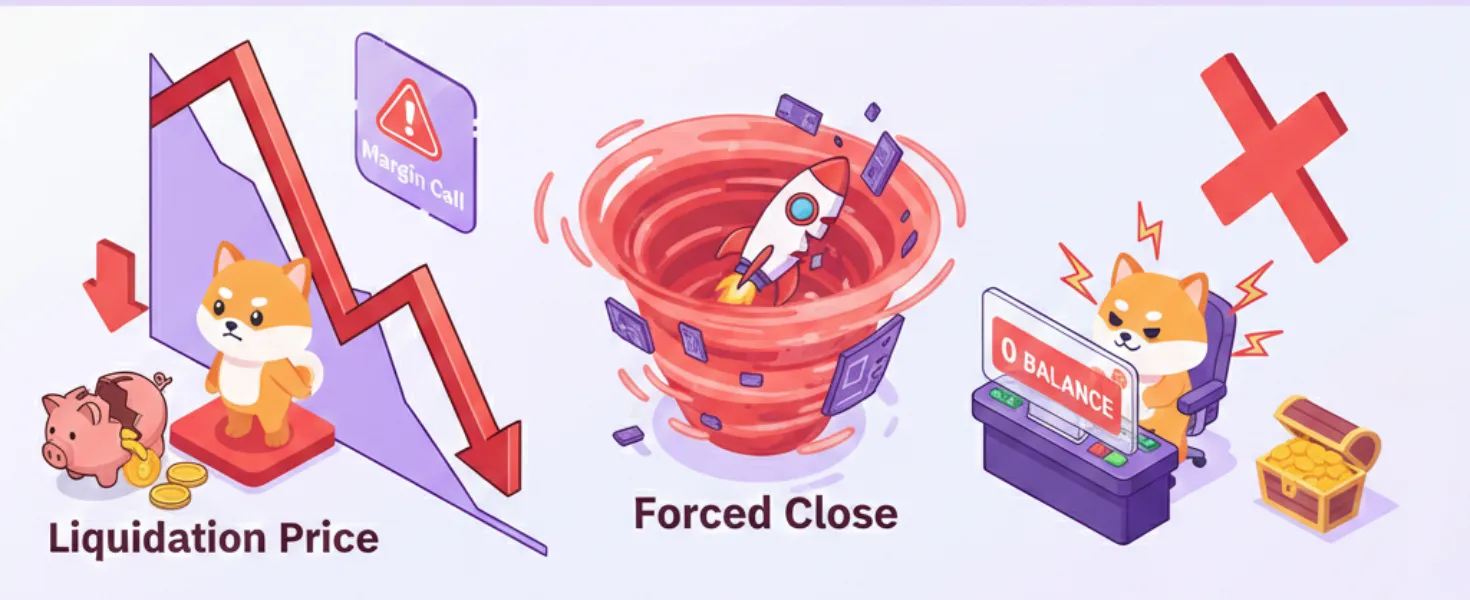
One of the biggest fears of derivatives traders, especially in margin and futures trading, is liquidation (forced settlement). This term refers to a process in which the exchange automatically closes a trader’s leveraged position because the account collateral or margin is no longer sufficient to cover the losses.
When the asset price moves against the prediction and the loss exceeds the collateral, the exchange sells your assets to protect its own capital and closes the position. The result of this process can be losing a large portion of your capital or even all of it.
In this article, we explain in simple terms what liquidation is, how it happens, and more importantly, how you can reduce the probability of liquidation through risk management and the use of appropriate tools.
What Is Liquidation?
In spot trading, you only buy and sell with your own assets, and there is no risk of liquidation. However, in margin or futures trading, you borrow funds from the exchange to increase your position size.
To protect its capital, the exchange sets a threshold price called the liquidation price; if the asset price reaches this red line, the exchange closes the trade and sells your capital. As a result, your collateral is lost and your position is closed.
Liquidation usually occurs in leveraged trading during high volatility because leverage multiplies both profits and losses. For example, using 10× leverage means that every 1% price change results in a 10% profit or loss relative to your initial capital. Therefore, a 10% price decrease can completely wipe out your initial capital.
Types of Liquidation
On some exchanges, settlement may occur in two ways:
Partial Liquidation:
The exchange first closes part of the position to reduce the trade size and leverage.
Full Liquidation:
The entire position is closed, and the trader loses the full trade amount and collateral.
Reasons for Liquidation
High Market Volatility:
The cryptocurrency market is highly volatile. Sudden price drops or spikes can quickly drain a margin account.
Using High Leverage:
The higher the leverage, the smaller price movements can lead to large losses and reaching the liquidation price.
Lack of Risk Management:
Not using stop loss, not having a clear trading plan, and overinvesting in a single position are among the main reasons for reaching the liquidation level.
FOMO and Emotional Decisions:
Emotional decision-making and following rumors or signals without analysis can lead to opening incorrect positions and ultimately liquidation.
Lack of Awareness of Exchange Rules:
Each exchange has different rules for calculating margin and liquidation price. Lack of knowledge of these rules prevents users from taking timely action.
How to Prevent Liquidation?
There is no guaranteed way to completely eliminate liquidation risk, but by applying the following strategies, you can significantly reduce its probability:
1. Using Stop Loss (SL)
The most important tool to prevent liquidation is using a stop loss. Setting an SL means that if the price moves against your prediction to a specified level, the position will close automatically and prevent further loss and reaching the liquidation price.
The stop loss level should be determined based on position size, support or resistance levels, and the risk-to-reward ratio. Avoid placing the stop loss too close or too far, and once set, do not move it without reason.
2. Leverage Management
Using high leverage is the main cause of liquidation. Beginners are advised to use leverage below 5× or trade in the spot market.
Higher leverage significantly reduces the loss margin and causes even small price movements to result in liquidation. Before choosing leverage, calculate your maximum tolerable loss and select leverage that keeps sufficient distance from the liquidation price.
3. Capital Management
Having a strong capital management system helps reduce liquidation risk. This includes the following:
Fixed Risk per Trade:
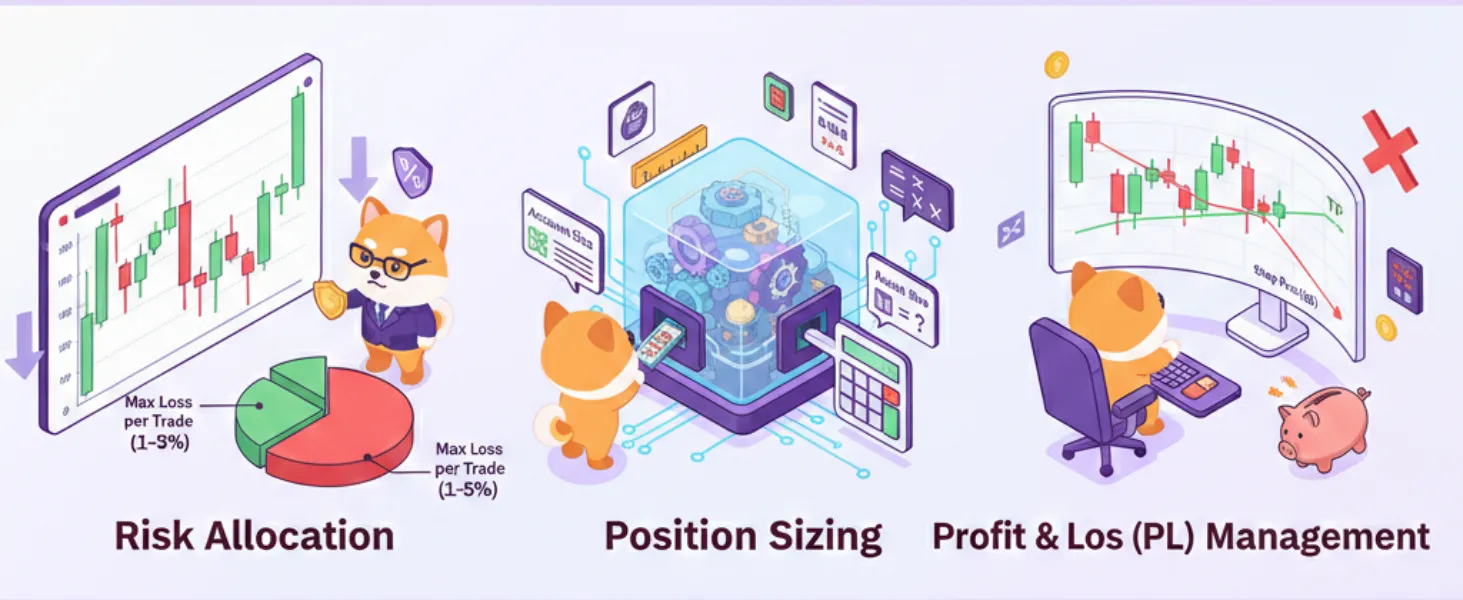
Risk only 1–3% of your total account in a single trade.
Proper Risk-to-Reward Ratio:
The risk-to-reward ratio should be greater than 1:2; meaning the take profit should be at least twice the stop loss.
Avoid Investing All Capital in One Position:
It is better to divide your capital across multiple positions and allocate a specific amount to each trade.
Using a Futures Calculator:
Many exchanges provide a calculator to determine the liquidation price; use it to check the distance between your entry price and the liquidation point.
4. Market Analysis and Volatility Forecasting
To reduce liquidation risk, you should use both technical and fundamental analysis. Identifying support and resistance levels, chart patterns, and important news can help you find better entry and exit points.
Indicators such as trading volume, volatility indicators, and economic events can provide early warnings about strong market movements.
5. Increasing Knowledge and Experience
The cryptocurrency market is young and high-risk; professional activity in it requires significant knowledge and experience. Continuous learning, studying educational articles, participating in specialized courses, and analyzing past trades help you make more accurate decisions and reduce liquidation risk.
6. Keeping Trades Small and Controlling Emotions
Avoid using all your capital in one trade or opening multiple positions in highly volatile markets. Also, controlling emotions (FOMO, greed, fear) and adhering to a trading plan is essential to prevent impulsive decisions.
Always remember that even the most professional traders incur losses; managing and accepting losses is part of the game.
7. Monitoring Open Positions and Checking Margin Calls
Do not leave leveraged positions unattended. In case of a sudden price drop, you must act quickly: either close part of the position or add more margin to prevent reaching the liquidation price.
Pay attention to “margin call” warnings and, upon receiving one, immediately deposit more funds or reduce the position size.
8. Choosing the Right Exchange and Trading Conditions
Rules, fees, and liquidation price calculations differ across exchanges. Before trading, carefully review the exchange conditions, margin modes (isolated and cross), and margin calculation methods.
In isolated mode, only the margin assigned to that specific position is used; in cross mode, the available account balance is used to prevent liquidation.
9. Choosing Spot Trading Instead of Leverage
If you do not yet have sufficient experience or feel unable to control market emotions, it is better to trade in the spot market. In spot trading, you own the actual asset and there is no risk of liquidation.
Difference Between Liquidation and Liquidity
Sometimes liquidation is confused with liquidity. Liquidity refers to the ease of buying and selling an asset and indicates how quickly and easily it can be traded. The higher the liquidity of a cryptocurrency, the faster and easier it can be traded.
In contrast, liquidation means the automatic closing of leveraged positions and the loss of collateral due to excessive losses.
Capital Management in
Futures Trading
Capital management means determining the size and risk of each trade and maintaining financial discipline so that a trader can survive in the highly volatile futures market. Futures trading allows you to speculate on the future price of an asset without owning it, but the presence of leverage and the risk of liquidation make every price fluctuation have a significant impact on the account. Therefore, following capital management principles in this market is even more important.
1. Basic Principles of Capital Management
A) Fixed Position Size
Always enter the market with a predefined position size and avoid emotionally increasing your trade size. Setting a fixed size based on account balance and risk tolerance prevents emotional trades and heavy losses.
B) Scaling Out of Positions
Set tiered take-profit levels and withdraw part of the profit at each level. Gradual exits reduce risk in case of sudden price reversals and help secure part of the profit.
C) Making the Trade Risk-Free
After the price reaches the first profit target, take partial profit and move the stop loss to the entry point; in this case, even if the market reverses, the trade closes without loss.
2. Difference Between Capital Management in Futures and Spot
In spot trading, you purchase the actual asset, and there is no leverage or liquidation risk; the maximum loss is the decline in asset value.
However, in futures trading, due to leverage and the ability to take both long and short positions, the risk is higher and the account can be wiped out. Therefore, using stop loss, controlling trade size, and having a trading plan are essential in futures.
3. Capital Management Tools and Techniques
3.1 Stop Loss and Take Profit
The first and most important capital management tool is using a stop loss. A stop loss prevents large and sudden losses, and in futures trading, its use is mandatory.
Setting a take profit also prevents earned profits from being reversed. Before entering a trade, determine SL and TP levels based on technical analysis.
3.2 Caution in Using Leverage
Leverage is a double-edged sword: it can multiply profits but also magnify losses. Use low leverage (3× or 5×), and even when using leverage, set the stop loss so that a large percentage of capital is not at risk.
Professional traders usually engage only 10–20% of their margin and never use their entire available balance.
3.3 Risk-to-Reward Ratio
Before entering any trade, evaluate the risk-to-reward (R/R) ratio. It is recommended to take trades with a minimum ratio of 1:2 or 1:3; meaning for every unit of risk, there should be at least two units of potential profit.
3.4 Emotional Control
The futures market has high volatility and strongly affects trader emotions. Controlling fear and greed and sticking to a trading plan are key factors for success. Traders without a plan are more influenced by emotions and make incorrect decisions.
3.5 Having a Trading Plan
A trading plan includes entry point, stop loss, take profit, and the risk amount per trade. Having a structured plan reduces impulsive decisions and makes capital management easier.
3.6 The 1% or 2% Rule
The 1–2% rule states that in each trade, you should risk only 1–2% of your total capital.
For example, if your account is $5,000 and you choose 2% risk, you must set your position size so that if the stop loss is triggered, the maximum loss is $100. This rule provides peace of mind and prevents large losses in the long run.
Position Size Calculation Formula:
Position Size = (Risk Amount × Account Balance) ÷ Distance to Stop Loss
Where the risk amount is usually 2% of the account balance. For example, if you have a $10,000 account and want to risk 2% ($200) and the distance to stop loss is 50 pips, then:
Position Size = (200 ÷ 50) × Pip Value
3.7 Using the Hedging Technique
Hedging is a risk reduction technique in which you open a trade in the opposite direction to offset the loss of the current position.
This method is useful when you do not want to close the main position but fear unexpected volatility. Note that hedging involves additional costs (fees and funding) and reduces overall profit; therefore, it should be used with sufficient knowledge and experience.
3.8 Diversification
Focusing on a single asset or a specific market can create significant risk. Investing in multiple assets or contracts such as different cryptocurrencies, commodities, and indices helps offset the loss of one position with the profit of another.
This principle of risk distribution is highly effective in volatile markets.
3.9 Tools and Platforms
Futures calculators are used to calculate position size, stop loss, take profit, and risk management.
Reputable platforms with TP/SL features allow you to automatically set stop loss and take profit levels.
Portfolio tracking tools such as CoinTracking help you monitor trading performance and capital allocation.
4. Common Mistakes and Additional Recommendations
Feedbeen content lists 13 common mistakes in capital management, including:
Not setting a stop loss, using high leverage, concentrating capital in one trade, trading without a plan, ignoring analysis, chasing losses, emotional management, and ignoring fees.
Suggested Solutions:
Always set a stop loss and place it logically according to technical analysis.
Use low leverage; high leverage increases the probability of liquidation.
Do not concentrate capital in one trade and follow the 1–2% rule.
Diversify position size and avoid dependence on a single asset.
Enter trades with a clear plan and predefine entry, exit, and TP/SL levels.
Act only based on analysis (technical and fundamental) and avoid blindly following signals.
After a loss, pause for a while and avoid trying to recover losses quickly.
Control emotions and stick to your strategy.
Consider costs and fees; high fees can reduce profits.
Choose high-liquidity markets to avoid slippage.
Avoid entering the market during extreme volatility; wait for market stabilization.