

Bitcoin, Ethereum, and other cryptocurrencies are transforming the way people invest, bank, and use money. In this introductory guide, you will become familiar with the concept of cryptocurrency and how it works.
In its simplest definition, cryptocurrency is a type of digital money—usually decentralized—designed for use on the internet. Bitcoin, which was introduced in 2008, was the world’s first cryptocurrency and remains the largest, most influential, and most well-known digital currency. In the years that followed, Bitcoin and other cryptocurrencies such as Ethereum grew as digital alternatives to government-issued money.

Most Popular Cryptocurrencies
The most popular cryptocurrencies by market capitalization are:
- Bitcoin
- Ethereum
- Tether
- Solana
Other well-known cryptocurrencies include Tezos, EOS, and Zcash.
Some of these currencies are structurally similar to Bitcoin, while others are built on different technologies or offer capabilities beyond simple value transfer.
Why Are Cryptocurrencies Important?
Cryptocurrencies enable the transfer of value over the internet without the need for intermediaries such as banks or payment companies. These transfers can be:
- Global
- Nearly instant and online
- Available 24 hours a day, 7 days a week
- Conducted with low fees
Cryptocurrencies are generally not issued or controlled by any government or central authority. Instead, they are managed by a peer-to-peer network of computers running free, open-source software. In most cases, anyone can participate in these networks.
If There Is No Bank or Government Involved, How Is Security Ensured?
The security of cryptocurrencies is guaranteed through a technology called blockchain.
A cryptocurrency blockchain closely resembles a bank’s ledger or balance sheet. Each cryptocurrency has its own blockchain, which contains a permanent and continuous record of all transactions carried out with that currency.
Unlike a bank ledger, a blockchain:
- Is distributed across the entire network
- Is not controlled by any company, country, or third party
- Allows anyone to participate
Blockchain is the result of decades of advances in computer science and mathematics and is considered one of the most significant technological innovations of the modern era.
Most importantly, cryptocurrencies enable individuals to have full control over their own assets.
The Future Outlook of Cryptocurrencies
The perspective of Brian Armstrong, CEO of Coinbase, on the future of cryptocurrencies
Key Cryptocurrency Concepts
Transferability
With cryptocurrencies, sending money to someone on the other side of the globe is as simple as paying cash at your local store.

Privacy
When making a payment with cryptocurrency, there is no need to provide unnecessary personal information to the merchant. This prevents financial data from being shared with banks, payment companies, advertisers, and credit agencies. Additionally, since sensitive information is not transmitted over the internet, the risk of identity theft or financial data breaches is significantly reduced.
Security
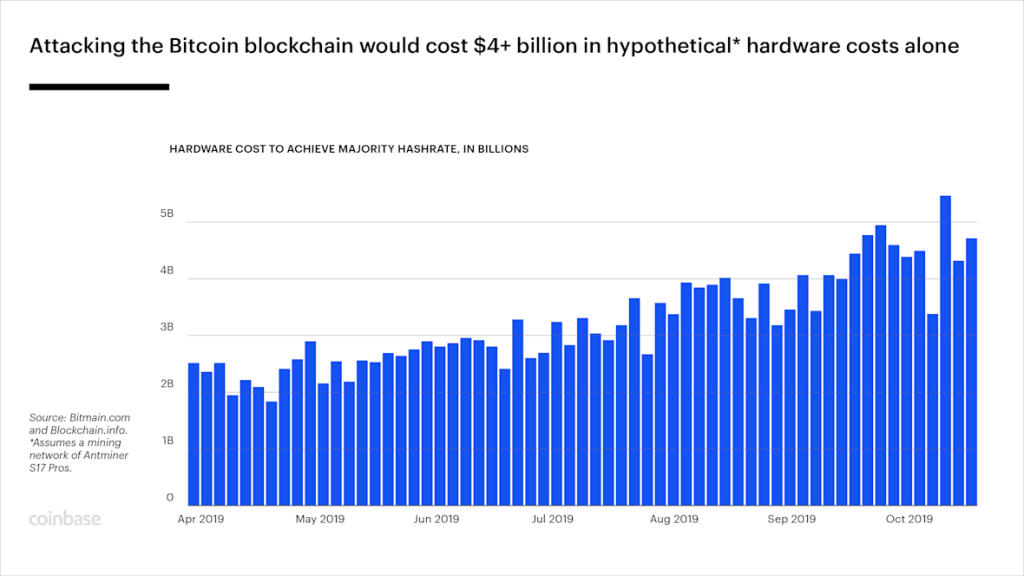
Almost all cryptocurrencies, including Bitcoin and Ethereum, are secured using blockchain technology. These networks are continuously monitored and validated by miners or validators through mechanisms such as Proof of Work (PoW) or Proof of Stake (PoS).
Portability
Your digital assets are not tied to any specific bank or government; therefore, you can access them from anywhere in the world under any circumstances, even if parts of the traditional financial system encounter problems.
Transparency
All transactions on networks such as Bitcoin, Ethereum, Tezos, and Bitcoin Cash are publicly recorded. This transparency prevents transaction manipulation, changes to the money supply, or alterations to rules midway through operations.
Irreversibility
Unlike credit card payments, cryptocurrency transactions cannot be reversed. This feature reduces the risk of fraud for merchants and can lower final transaction costs for users.
Safety
The Bitcoin network has never been successfully hacked. The open-source and permissionless nature of cryptocurrencies allows experts worldwide to continuously review and strengthen their security.
Why Cryptocurrencies Are the Future of the Financial System
Cryptocurrencies are the first true alternative to the traditional banking system and offer significant advantages over legacy payment methods and traditional asset classes. They can be considered Money 2.0—a new type of money inherently designed for the internet, with the potential to be the fastest, simplest, cheapest, safest, and most global means of value exchange in human history.
Cryptocurrencies can be used to purchase goods and services or held as part of an investment strategy. The key point is that they cannot be manipulated by any central authority because, by design, no central authority exists. Regardless of what happens to governments or financial systems, your digital assets remain secure on the blockchain network.
Equality in Financial Access
Cryptocurrencies provide equal opportunities, regardless of where you were born or which country you live in. All you need is a smartphone or an internet-connected device. With this simple tool, you gain the same level of financial access as other users around the world.
Expanding Economic Freedom Worldwide

Cryptocurrencies as a Global Opportunity
Cryptocurrencies create unique opportunities to enhance economic freedom worldwide. Their inherent borderless nature allows for free trade even in countries with strict financial restrictions.
In regions where high inflation is a major issue, cryptocurrencies can serve as an alternative to inefficient fiat currencies—for both storing value and conducting everyday payments.
Cryptocurrency as an Investment Tool
As part of a comprehensive investment strategy, there are several ways to approach crypto:
- Buy and Hold: A simple approach is to purchase and hold assets like Bitcoin, which has grown from nearly worthless in 2008 to thousands of dollars per unit.
- Active Trading: Another approach is active trading—buying and selling cryptocurrencies that experience high price volatility.
- Stablecoin Investment: For investors interested in crypto but seeking lower risk, USD Coin is a popular option. This cryptocurrency is pegged 1:1 to the U.S. dollar, offering the stability of a traditional currency while retaining crypto advantages like fast and low-cost international transfers.
Users on Coinbase who hold USDC can earn rewards, making it an attractive alternative to traditional savings accounts.
Cryptocurrencies provide financial equality regardless of birthplace or residence.
Why Invest in Cryptocurrency?
Online exchanges like Coinbase make buying and selling cryptocurrencies simple, secure, and accessible:
- Creating a secure account takes only a few minutes.
- You can purchase crypto using a bank card or bank account.
- It’s possible to buy very small amounts—for example, just $25 of Bitcoin.
- Many cryptocurrencies, including USD Coin and Tezos, reward users simply for holding them.
- On Coinbase, certain assets can earn up to 1% annual percentage yield (APY), typically higher than traditional savings accounts.
- By staking Tezos, users can earn up to 5% APY.
- Unlike stocks or bonds, transferring cryptocurrency to others or using it for payments is straightforward.
Today, millions of people worldwide hold Bitcoin and other cryptocurrencies as part of their investment portfolios.

What Is a Stablecoin?
USD Coin is an example of a type of cryptocurrency called a stablecoin. These can be thought of as “digital dollars”—assets designed to reduce volatility and increase usability. Stablecoins combine the main advantages of cryptocurrency—such as fast global transfers, security, and privacy—with the price stability of fiat currencies. This stability is achieved by pegging their value to an external asset, such as the U.S. dollar or commodities like gold. As a result, stablecoins generally do not experience sharp price fluctuations, making them suitable for everyday use as money. They can also function as a safe way to save, similar to traditional bank accounts.
Key Question: What Is the Future of Cryptocurrency?
Experts often highlight that cryptocurrencies can address weaknesses in the current financial system, such as high fees, identity theft, and extreme economic inequality. Beyond finance, the underlying technology of cryptocurrencies—blockchain—has applications in many areas, from transforming supply chains to building a next-generation decentralized internet.
How Does Cryptocurrency Work?
Bitcoin was the first and most well-known cryptocurrency, but today thousands of cryptocurrencies exist. Many, like Litecoin and Bitcoin Cash, maintain Bitcoin’s core features while exploring new transaction processing methods. Others, like Ethereum, offer broader capabilities, enabling not just value transfer but also the execution of programs and creation of smart contracts. All cryptocurrencies are built on a concept called blockchain, which is key to understanding how digital currencies function.
What Is Blockchain?
At its simplest, a blockchain is a list of transactions that anyone can view and verify. For example, the Bitcoin blockchain records every instance of Bitcoin being sent or received. This transaction ledger is essential for most cryptocurrencies because it allows secure payments between strangers without requiring an intermediary like a bank.
Blockchain Applications Beyond Crypto
Blockchain is not limited to cryptocurrencies. Today, it is used for medical research, improved health record sharing, optimizing supply chains, increasing internet privacy, and many other innovative applications. The principles of Bitcoin and its blockchain were first introduced in a whitepaper published online in late 2007 by an individual or group using the pseudonym Satoshi Nakamoto.
Why Is Blockchain Secure?
The blockchain ledger is distributed across all computers in the network and continuously verified by them. This distributed structure ensures no central treasury or database exists and that hacking, theft, or manipulation of the system is extremely difficult.
Cryptocurrencies use public–private key cryptography to transfer asset ownership on a secure, distributed ledger. The private key is a highly secure password that should never be shared, used to move your assets on the network. The public key can be safely shared, allowing others to send cryptocurrency to you. Importantly, the public key cannot be used to deduce the private key.
What Is Cryptocurrency Mining?
Bitcoin is mined through a decentralized (peer-to-peer) network of computers. Mining is not only for creating new Bitcoins—it also updates and secures the network. Miners continuously verify the public blockchain and add new transactions, maintaining network security. Technically, anyone with a computer and internet connection can mine, but in practice, mining is not always profitable. Factors affecting profitability include type of cryptocurrency, system processing power, and electricity costs. As a result, most mining today is done by specialized companies or large groups that pool computing power.
The Bitcoin network runs a continuous competition. Mining devices worldwide compete to solve a mathematical problem. The first to solve it updates the blockchain with new transactions and receives newly created Bitcoins as a reward. These Bitcoins then enter the public market.
Key Question: Where Does Cryptocurrency Value Come From?
The economic value of cryptocurrencies—like all goods and services—comes from supply and demand. Supply is how much is available (e.g., how many Bitcoins exist to purchase), and demand is how much people want to own it. A cryptocurrency’s price is always determined by the balance between these two factors. Beyond monetary value, there is also utility value. Many people enjoy spending or gifting cryptocurrency as a way to support a new financial system. Others prefer Bitcoin due to low fees and want to encourage businesses to accept it.
How to Buy Bitcoin and Other Cryptocurrencies
The simplest way to acquire cryptocurrency is through an online exchange like OURBIT. On exchanges such as Coinbase, you can buy popular cryptocurrencies like Bitcoin (BTC), Litecoin (LTC), Ethereum (ETH), Bitcoin Cash (BCH), and Ethereum Classic (ETC). You can also explore emerging cryptocurrencies like Stellar Lumens and EOS. Some exchanges even allow earning free crypto through educational programs.
Which Cryptocurrency Should You Choose?
The right approach is to first determine your goal with crypto and then select a currency that supports it. If you want to purchase goods like a laptop, Bitcoin is ideal due to widespread acceptance. If you want to use digital programs or games, Ethereum is a popular choice. You don’t need to buy a whole unit; on platforms like Coinbase, you can purchase fractions of a cryptocurrency, even starting from roughly $2/€2/£2 (or local currency equivalent).
How to Store Cryptocurrency
Storing cryptocurrency is similar to storing cash—you must protect it from theft or loss. There are various online and offline storage methods, but the simplest is using a secure, reputable exchange like Coinbase. Users can safely store, send, receive, and convert cryptocurrency through their computer, tablet, or mobile device.
Transferring to a Bank Account
If you want to convert cryptocurrency to fiat and transfer it to your bank account, Coinbase makes it almost as simple as moving money between two bank accounts. Like bank transfers or ATM withdrawals, there are daily limits, and the transaction may take a few days to a week to complete.
What Can You Do with Cryptocurrency?
The uses of cryptocurrency are diverse and continually expanding. Examples include purchases (over 8,000 international merchants accept crypto payments via Coinbase Commerce), charity donations, gifting, tipping creators, innovative money + tech applications like Orchid VPN, travel (reducing currency exchange costs), buying virtual assets in platforms like Decentraland, and participating in decentralized finance (DeFi) projects that aim to recreate financial systems without centralized intermediaries.